Millwright Apprenticeship Programme at Finlar Fine Foods: A Gateway to a Skilled Engineering Career
CLICK HERE FOR MORE RELATED JOBS
Introduction
The manufacturing industry remains one of the most important sectors driving economic growth, innovation, and employment opportunities. As industries continue to adopt advanced technologies and modern production systems, the demand for skilled technical professionals continues to increase. One of the most respected trades within the manufacturing environment is the Millwright trade.
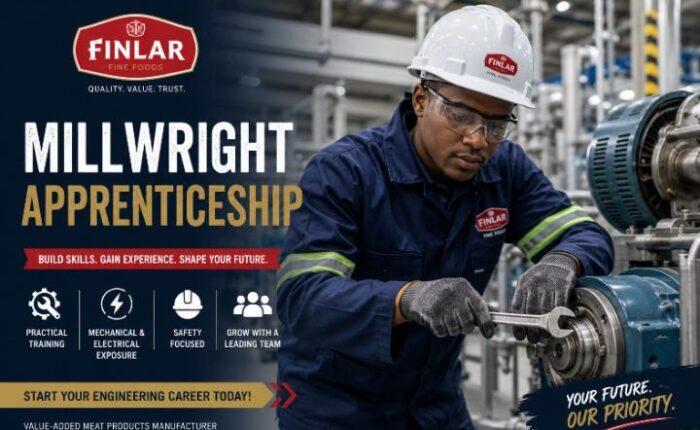
Finlar Fine Foods is offering an exciting Millwright Apprenticeship opportunity for aspiring artisans who wish to build a rewarding career in engineering maintenance. This apprenticeship programme provides practical workplace experience, technical development, and mentorship that equips candidates with the skills required to become qualified Millwrights.
The programme is ideal for motivated individuals who have a passion for engineering, problem-solving, and machinery maintenance. Apprentices will gain exposure to both mechanical and electrical systems while working in a fast-paced food manufacturing environment that produces value-added meat products.
About Finlar Fine Foods
Finlar Fine Foods is a well-established food manufacturing company specializing in the production of high-quality value-added meat products. The company is committed to maintaining excellent standards of food safety, quality assurance, and operational efficiency.
Through continuous investment in people, technology, and equipment, Finlar Fine Foods creates opportunities for young individuals to acquire valuable workplace skills while contributing to the company’s growth and success.
The apprenticeship programme forms part of the company’s commitment to skills development and creating future artisans who can support South Africa’s manufacturing sector.
Understanding the Millwright Profession
A Millwright is a highly skilled artisan responsible for installing, maintaining, repairing, and troubleshooting industrial machinery and equipment.
Unlike trades that focus only on one discipline, Millwrights possess expertise in both mechanical and electrical systems. This combination makes them versatile professionals capable of working across multiple industries.
Millwrights are often responsible for:
- Maintaining production equipment
- Repairing machinery breakdowns
- Installing new equipment
- Diagnosing faults
- Performing preventative maintenance
- Improving equipment efficiency
- Supporting production operations
Because manufacturing plants rely heavily on machinery to maintain production targets, Millwrights play a critical role in ensuring equipment operates efficiently and safely.
Purpose of the Apprenticeship Programme
The primary objective of the Millwright Apprenticeship Programme is to develop competent artisans through structured workplace training and technical learning.
Participants will receive practical exposure to real-life engineering challenges while working under the supervision of experienced artisans and engineering professionals.
The programme aims to:
- Develop technical competencies
- Build practical engineering skills
- Promote workplace safety awareness
- Improve problem-solving abilities
- Prepare apprentices for trade qualification
- Support career development within manufacturing
By the end of the apprenticeship, participants will have gained valuable experience that can significantly enhance their future employment opportunities.
What Apprentices Can Expect
The apprenticeship provides a balanced combination of theoretical learning and practical experience.
Apprentices can expect:
Workplace Learning
Practical training is one of the most valuable components of the programme. Apprentices will work directly on machinery and equipment used within the production environment.
Mentorship
Experienced artisans and supervisors will provide guidance, coaching, and technical support throughout the programme.
Technical Development
Participants will continuously improve their understanding of:
- Electrical systems
- Mechanical systems
- Pneumatics
- Hydraulics
- Maintenance procedures
- Fault-finding techniques
Exposure to Manufacturing Operations
Apprentices will gain a better understanding of how engineering supports production processes and contributes to business success.
Key Responsibilities of a Millwright Apprentice
The apprenticeship includes a wide range of responsibilities designed to develop technical competence.
Assisting with Equipment Installation
Apprentices will participate in the installation of production machinery and engineering equipment.
This may include:
- Positioning machinery
- Connecting components
- Testing systems
- Verifying functionality
Understanding installation procedures provides a strong foundation for future maintenance activities.
Supporting Maintenance Activities
Maintenance is essential to keeping equipment operating efficiently.
Apprentices will assist in:
- Routine inspections
- Lubrication schedules
- Component replacement
- Equipment servicing
These activities help prevent unexpected breakdowns and extend machinery lifespan.
Troubleshooting Mechanical Systems
Production equipment can experience various mechanical issues.
Apprentices will learn how to diagnose problems involving:
- Bearings
- Gearboxes
- Shafts
- Belts
- Chains
- Pumps
Developing troubleshooting skills is crucial for becoming an effective Millwright.
Assisting with Electrical Maintenance
Electrical systems form an important part of modern manufacturing operations.
Apprentices will gain exposure to:
- Motors
- Electrical panels
- Sensors
- Control systems
- Switchgear
This knowledge enables them to support electrical maintenance tasks safely and effectively.
Participating in Preventative Maintenance
Preventative maintenance reduces equipment failures and production interruptions.
Apprentices will help perform:
- Scheduled inspections
- Equipment testing
- Performance monitoring
- Preventative repairs
These activities contribute to operational reliability.
Diagnosing Equipment Faults
Fault diagnosis requires analytical thinking and technical knowledge.
Apprentices will learn how to:
- Identify root causes
- Analyze symptoms
- Test equipment
- Recommend corrective actions
Strong diagnostic skills are highly valued within engineering environments.
Importance of Safety in Engineering
Safety remains a top priority in manufacturing and engineering workplaces.
Apprentices must understand and follow:
- Occupational health and safety procedures
- Lockout and tagout processes
- Hazard identification practices
- Risk assessment procedures
- Emergency response protocols
A strong safety culture protects employees, equipment, and production processes.
Food Safety Awareness
Because Finlar Fine Foods operates within the food manufacturing industry, employees must comply with strict food safety requirements.
Apprentices will learn about:
- Hygiene standards
- Contamination prevention
- Food safety regulations
- Cleaning procedures
- Quality assurance systems
These practices help ensure products meet customer expectations and regulatory requirements.
Maintenance Record Keeping
Accurate documentation is an important part of engineering maintenance.
Apprentices will assist in maintaining records related to:
- Equipment inspections
- Maintenance activities
- Repairs completed
- Spare parts used
- Downtime incidents
Good record-keeping supports effective asset management and continuous improvement.
Working with Production Teams
Engineering and production departments must work together to achieve operational goals.
Apprentices will collaborate with:
- Machine operators
- Production supervisors
- Quality controllers
- Maintenance artisans
Strong teamwork contributes to productivity and operational success.
Minimum Requirements
Applicants must meet specific educational requirements.
Grade 12 / Matric
Candidates should have successfully completed Grade 12, including Mathematics.
Mathematics provides essential problem-solving and calculation skills used in engineering environments.
N2 Engineering Studies
Applicants should possess an N2 Certificate or higher qualification in:
- Millwright Trade Theory
- Electrical Engineering
- Mechanical Engineering
This theoretical knowledge provides a strong foundation for practical workplace learning.
Driver’s License
A valid driver’s license is required for the position.
Skills That Will Help Candidates Succeed
Successful apprentices often possess a combination of technical and personal skills.
These include:
Problem-Solving Ability
Engineering professionals frequently encounter equipment challenges requiring innovative solutions.
Attention to Detail
Small issues can sometimes lead to major equipment failures.
Careful observation helps identify potential problems early.
Communication Skills
Effective communication supports teamwork and operational efficiency.
Adaptability
Manufacturing environments change rapidly.
Apprentices must be willing to learn and adapt to new technologies and processes.
Personal Attributes Employers Value
Finlar Fine Foods seeks candidates who demonstrate:
- Reliability
- Integrity
- Accountability
- Positive attitude
- Willingness to learn
- Professionalism
- Commitment to safety
These qualities contribute significantly to workplace success.
Career Opportunities After Qualification
A qualified Millwright can pursue opportunities in numerous industries.
These include:
- Food manufacturing
- Mining
- Automotive manufacturing
- Packaging
- Energy generation
- Petrochemical operations
- FMCG production
Career progression opportunities may include:
- Artisan
- Senior Artisan
- Maintenance Technician
- Engineering Planner
- Maintenance Supervisor
- Engineering Foreman
- Maintenance Manager
Why Choose a Millwright Career?
The Millwright trade offers numerous benefits.
These include:
- High demand for skilled artisans
- Diverse career opportunities
- Competitive earning potential
- Continuous learning opportunities
- Exposure to advanced technologies
- Strong job security
As industries become increasingly automated, skilled Millwrights remain essential to operational success.
CLICK HERE FOR MORE RELATED JOBS
Conclusion
The Finlar Fine Foods Millwright Apprenticeship Programme represents an outstanding opportunity for aspiring artisans to gain practical experience, technical skills, and industry exposure within a leading manufacturing environment.
Through structured training, mentorship, and hands-on learning, apprentices will develop the competencies required to pursue a successful career as a qualified Millwright.
Individuals with a passion for engineering, a strong work ethic, and a commitment to learning are encouraged to pursue opportunities such as this apprenticeship, which serves as a valuable stepping stone toward a rewarding and sustainable career in the engineering and manufacturing sectors.